


Flat vs Land investment in Dhaka 2026 is one of the most debated questions among property buyers and investors right now. With rising construction costs, the active implementation of the Detailed Area Plan (DAP), and a rapidly expanding urban corridor, the decision carries more weight than it did just a few years ago.
Both options come with distinct advantages and neither is universally superior. A flat offers immediate usability, rental income and relatively straightforward legal processes. Land, on the other hand offers greater long-term appreciation potential and the freedom to develop on your own terms. The right answer depends entirely on your investment timeline, financial capacity, and long-term goals.
In this guide, we break down both investment types across return potential, risk profile, liquidity, and current market conditions – so you can make an informed decision backed by data, not assumptions.
Note: The data and market observations in this article are primarily relevant to Greater Dhaka, including RAJUK jurisdiction areas and satellite towns such as Keraniganj, Purbachal, and Uttara extension zones.
Why 2026 Is a Defining Year for Property Investment in Dhaka
Several structural shifts are reshaping Dhaka’s real estate landscape in 2026. The DAP 2022–2035 is now in active enforcement, reclassifying land use across hundreds of areas in and around the city. This has restricted development in certain flood-prone and agricultural zones while simultaneously opening up new residential corridors on the city’s periphery.
At the same time, construction material costs have climbed significantly over the past three years, pushing new apartment prices higher. For investors watching from the sidelines, this has made entry-level flat purchases in prime areas more expensive – while land in well-connected fringe locations remains comparatively accessible.
Political stability and continued infrastructure spending – including road expansions, bridge projects, and the east west elevated expressway – are further driving demand in areas that were considered remote just a decade ago. Investors who understand these dynamics are better positioned to act at the right time.
Land vs Flat: Understanding the Core Differences
| Factor | Land Investment | Flat / Apartment |
| Nature of Asset | Raw or semi-developed plot | Ready or under-construction unit |
| Entry Cost | Lower in peri-urban areas | Generally higher in Dhaka city |
| Income Type | Capital appreciation only | Rental income + capital appreciation |
| Legal Complexity | Higher – khatian, mutation, RS/CS required | Lower – developer manages most documentation |
| Regulatory Framework | DAP, RAJUK, local administration | RAJUK, BNBC building code |
| Maintenance Cost | Minimal to none (raw land) | Regular service charge and upkeep |
| Liquidity | Lower – takes time to find the right buyer | Higher – wider buyer pool available |
| Development Potential | Full flexibility to build as needed | Fixed structure; limited to renovation |
Return on Investment: A Data-Backed Comparison
Evaluating returns requires looking at two primary metrics: price appreciation over time and income generated through rent. Land typically outperforms on the first, while flats tend to offer more consistent returns through the second.
Land Price Appreciation in Dhaka – Historical Overview
Over the past decade, strategically located land in and around Dhaka has appreciated at an average rate of 15–25% annually in high-demand zones. Areas near planned infrastructure corridors have consistently outperformed the broader market.
| Location | Approx. Price (2015) per Katha | Approx. Price (2026) per Katha | Appreciation |
| Uttara (Sector 11–14) | BDT 55–65 Lakh | BDT 1.5–2 Crore | ~400% |
| Purbachal New Town | BDT 5–25 Lakh | BDT 60–90 Lakh | ~250–300% |
| Keraniganj (planned zones) | BDT 6–11 Lakh | BDT 24–45 Lakh | ~200–300% |
| Mohammadpur (inner area) | BDT 60 Lakh+ | BDT 1.5–2 Crore | ~300% |
Disclaimer: The figures above are approximate estimates compiled from available market reports and developer pricing data. For area-specific valuations, consulting a certified property valuer is recommended.
Rental Yield and Resale Value of Flats in Dhaka
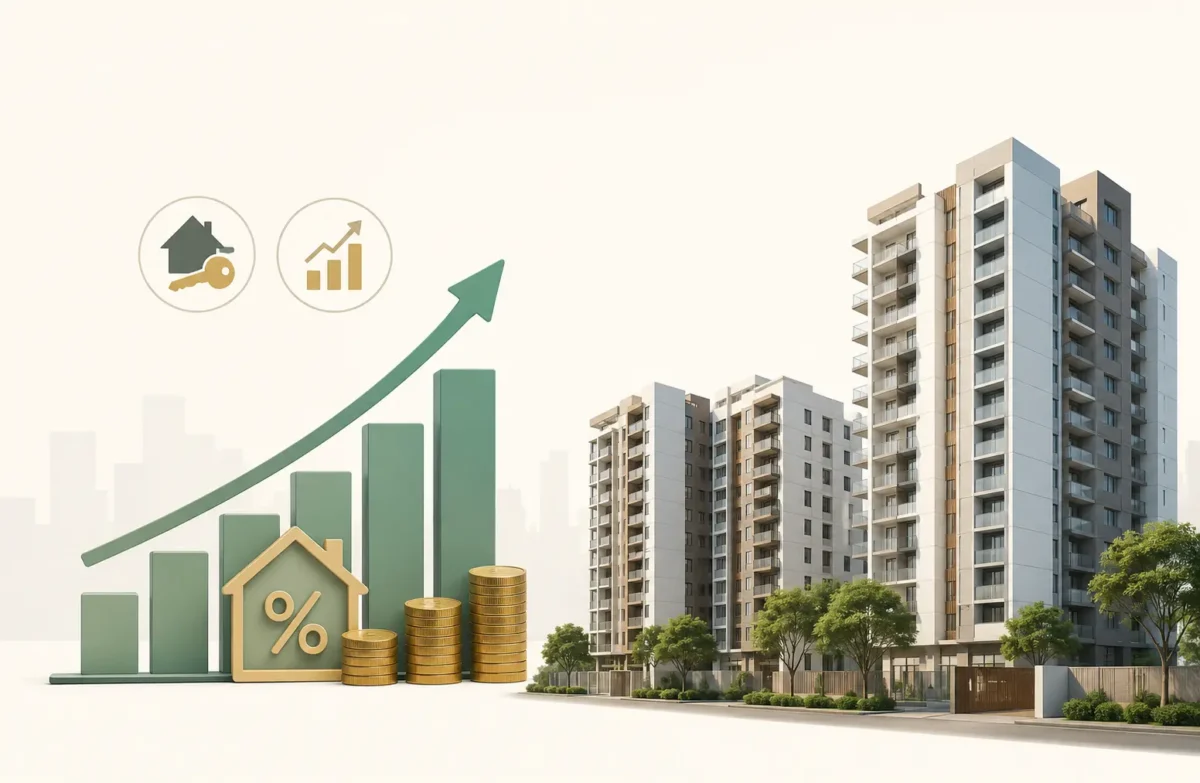
The most tangible advantage of a flat investment is predictable passive income. In Dhaka, gross rental yields for residential apartments typically range between 4% and 7%, depending on location, size, and building quality.
| Area | Average Monthly Rent (2 BHK) | Estimated Flat Value | Gross Rental Yield |
| Gulshan 1 & 2 | BDT 40,000–70,000 | BDT 1.5–3 Crore | 3.5–5% |
| Dhanmondi | BDT 25,000–45,000 | BDT 80 Lakh–1.8 Crore | 4–6% |
| Mohammadpur | BDT 18,000–30,000 | BDT 50–90 Lakh | 5–7% |
| Uttara | BDT 22,000–38,000 | BDT 60 Lakh–1.2 Crore | 4.5–6% |
| Bashundhara R/A | BDT 25,000–45,000 | BDT 70 Lakh–1.5 Crore | 4–6% |
It is important to note that gross yield does not account for service charges, maintenance costs, vacancy periods, and income tax on rental earnings. Net yield after deductions typically falls in the 3–5% range.
Risk, Liquidity, and Holding Period – Key Considerations
| Factor | Land | Flat / Apartment |
| Liquidity | Lower – finding the right buyer takes time | Higher – especially for ready flats in prime areas |
| Legal Risk | Higher – title disputes, encroachment, fake documents | Lower – developer manages most legal processes |
| Market Volatility | Less volatile; stable over the long term | Varies by developer credibility and location |
| Ideal Hold Period | 7–15 years or more for maximum return | 3–7 years (longer if holding for rent) |
| Capital Required | Can start lower in emerging areas | Generally requires higher upfront investment in Dhaka |
| Ongoing Cost | Minimal – no maintenance required | Service charge, maintenance, tax on rental income |
| Development Upside | Full flexibility to develop or resell as land value grows | Fixed structure; value growth tied to market and location |
Who Should Invest in Land? Who Should Buy a Flat?
No investment is right for everyone. The best choice depends on your financial profile, how long you intend to hold the asset, and what you expect it to do for you.
Consider Investing in Land If You –
- Are focused on long-term capital growth over 7–15 years
- Do not depend on the investment for regular monthly income
- Plan to develop the property yourself in the future
- Are comfortable navigating legal documentation with professional support
- Want to enter the market at a lower cost through emerging areas
Consider Buying a Flat If You –
- Want a reliable source of passive rental income
- Prefer a low-maintenance, immediately usable asset
- Plan to sell within a shorter time horizon of 3–7 years
- Would like to avoid the legal complexities of land acquisition
- Are purchasing for personal or family residential use
The DAP Factor: What Dhaka’s Master Plan Means for Investors
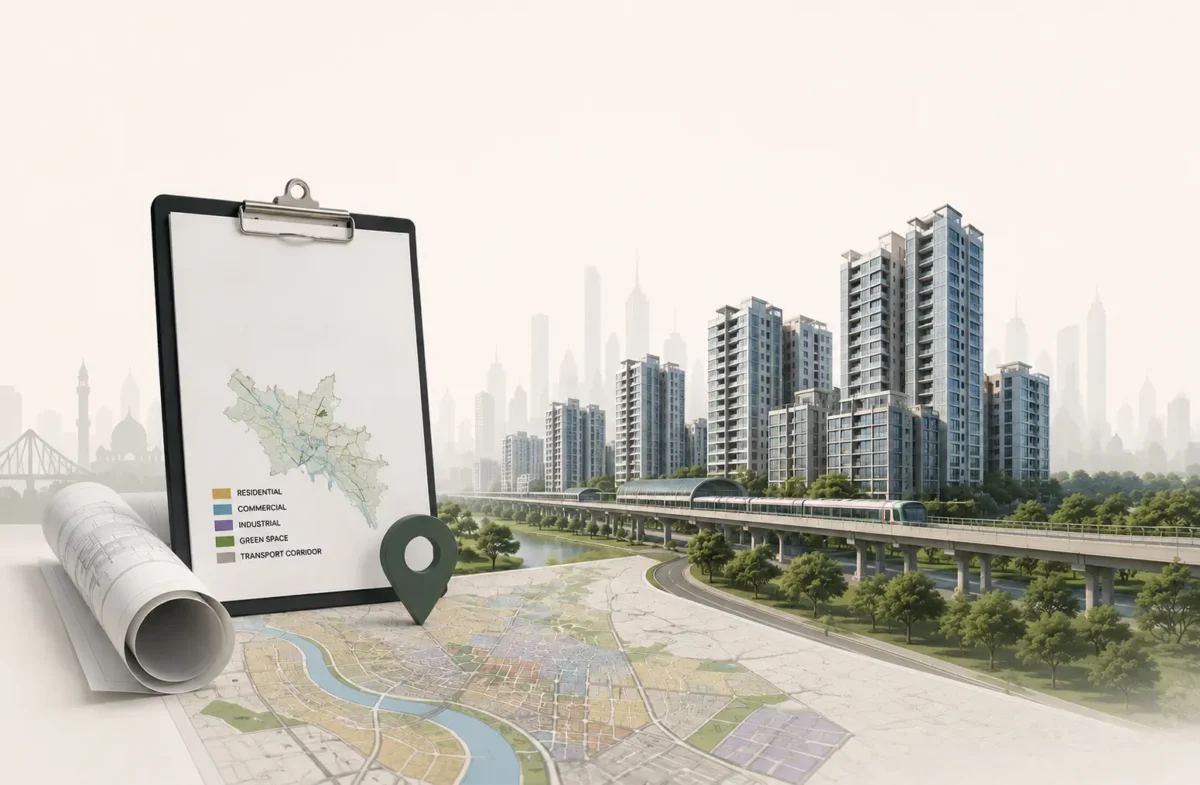
The Detailed Area Plan (DAP) 2022–2035 is one of the most consequential policy changes for Dhaka’s property market in recent history. It has introduced new Floor Area Ratio (FAR) limits, rezoned significant portions of land around the city, and placed strict restrictions on development in ecologically sensitive areas.
| DAP Impact Area | Effect on Land Investment | Effect on Flat Investment |
| Flood plains and agricultural zones | High risk – development restrictions apply | Generally unaffected |
| New residential zones (peri-urban) | Strong opportunity – new demand corridors opening up | New projects being launched in these areas |
| Zones with increased FAR | Land value rises significantly due to higher buildable area | Developers can build more units, increasing supply |
| Road widening and bypass projects | Adjacent land prices rise ahead of completion | Accessibility improvement drives flat values up |
Before purchasing land, always verify its zone classification on the RAJUK DAP map. Whether a plot falls in a restricted, residential, or commercial zone directly determines its investment potential and legality of development.
Due Diligence Checklist Before You Invest
Regardless of which option you choose, thorough due diligence is non-negotiable. Skipping this step is one of the most common – and costly – mistakes property investors make in Bangladesh.
Before Buying Land – Verify the Following
- RS and CS khatian to confirm legitimate ownership
- Mutation (Namjari) status – ensure it is complete and up to date
- History of encroachment, disputes, or court cases
- DAP zone classification – residential, commercial, restricted, or flood-prone
- Road access, utility availability (gas, electricity, water)
- Nearby infrastructure plans – road widening, bridge, or bypass projects
Before Buying a Flat – Verify the Following
- Developer’s REHAB membership and completed project track record
- RAJUK-approved building plan and land ownership documents
- Completion Certificate (CC) for ready apartments
- Service charge structure and management committee details
- Fire safety compliance and BNBC building code adherence
- Clarity on utility connections – individual meters vs. shared
Final Verdict: Land or Flat – Which Is the Smarter Investment in 2026?
There is no universal answer. The better investment depends on your financial capacity, time horizon, income needs, and risk tolerance.
In 2026, land in well-connected, legally sound, and DAP-compliant areas – particularly around Keraniganj, Purbachal, and the Uttara extension zone – holds strong long-term appreciation potential. For investors seeking immediate income and a simpler ownership experience, a quality flat from an established developer in a proven residential area remains a reliable choice.
The most important principle, however, remains the same regardless of which asset you choose: buy from verified sources, conduct proper legal checks, and invest with a clear plan in mind.
FAQs
Q: Which gives higher returns in Dhaka – land or flat investment?
A: Land generally offers higher capital appreciation over the long term, particularly in developing areas near infrastructure projects. Flats provide more consistent returns through rental income, making the total return comparable when both are factored in. The right answer depends on your investment timeline and income needs.
Q: Is buying land in Dhaka safe in 2026?
A: Purchasing land in DAP-compliant zones with clear legal documentation is considered relatively safe. However, land in flood plains, agricultural zones, or areas with disputed ownership carries significant risk. Always verify the RAJUK DAP map and confirm full legal clearance before committing.
Q: What is the average rental yield for flats in Dhaka?
A: Gross rental yields for residential apartments in Dhaka typically range between 4% and 7%, depending on the location and property quality. After accounting for maintenance costs, service charges, and applicable taxes, net yields generally fall between 3% and 5%.
Q: Can I start investing in Dhaka property with a limited budget?
A: Yes, absolutely. Keraniganj, located close to Dhaka, is now a rapidly developing area offering entry-level plots at comparatively lower prices. Investing through a planned project like Maxwell Western City reduces legal complexity and helps you manage risk safely and effectively, even on a limited budget.
Q: If I buy land but do not develop it, will I still make a profit?
A: Yes – in most cases, well-documented land in a developing area appreciates in value even without active development. The advantage of raw land is that there are no ongoing maintenance costs. Development, however, can significantly multiply the overall return.
Q: Is RAJUK approval essential when buying a flat?
A: Absolutely. Purchasing a flat without RAJUK-approved building plans can create serious legal complications in the future. For ready apartments, always confirm that a Completion Certificate (CC) has been issued before finalizing the transaction.
Q: Can foreign nationals or Non-Resident Bangladeshis invest in property in Dhaka?
A: Foreign nationals can purchase residential flats in Bangladesh by making payment in foreign currency, in accordance with Bangladesh Bank regulations. Land acquisition involves more restrictions. Non-Resident Bangladeshis (NRBs) generally face fewer limitations and can invest in both categories. Consulting a legal advisor familiar with BIDA and Bangladesh Bank guidelines is recommended.
Q: Which is easier to resell – land or a flat?
A: Flats typically sell faster due to a larger and more accessible buyer pool, particularly in established residential areas. Land resale takes more time but often delivers a higher profit margin, especially in locations that have experienced infrastructure development since the time of purchase.


